🔬 8th Grade Science · Unit 2
Chemical Reactions
21 short narrated lessons in 4 chapters, each with pictures, a quiz with a hint and a second try, and an explanation for every answer.
Standards: MS-PS1-2 MS-PS1-5 MS-PS1-3 MS-PS1-6
8th Grade Science · 5 units


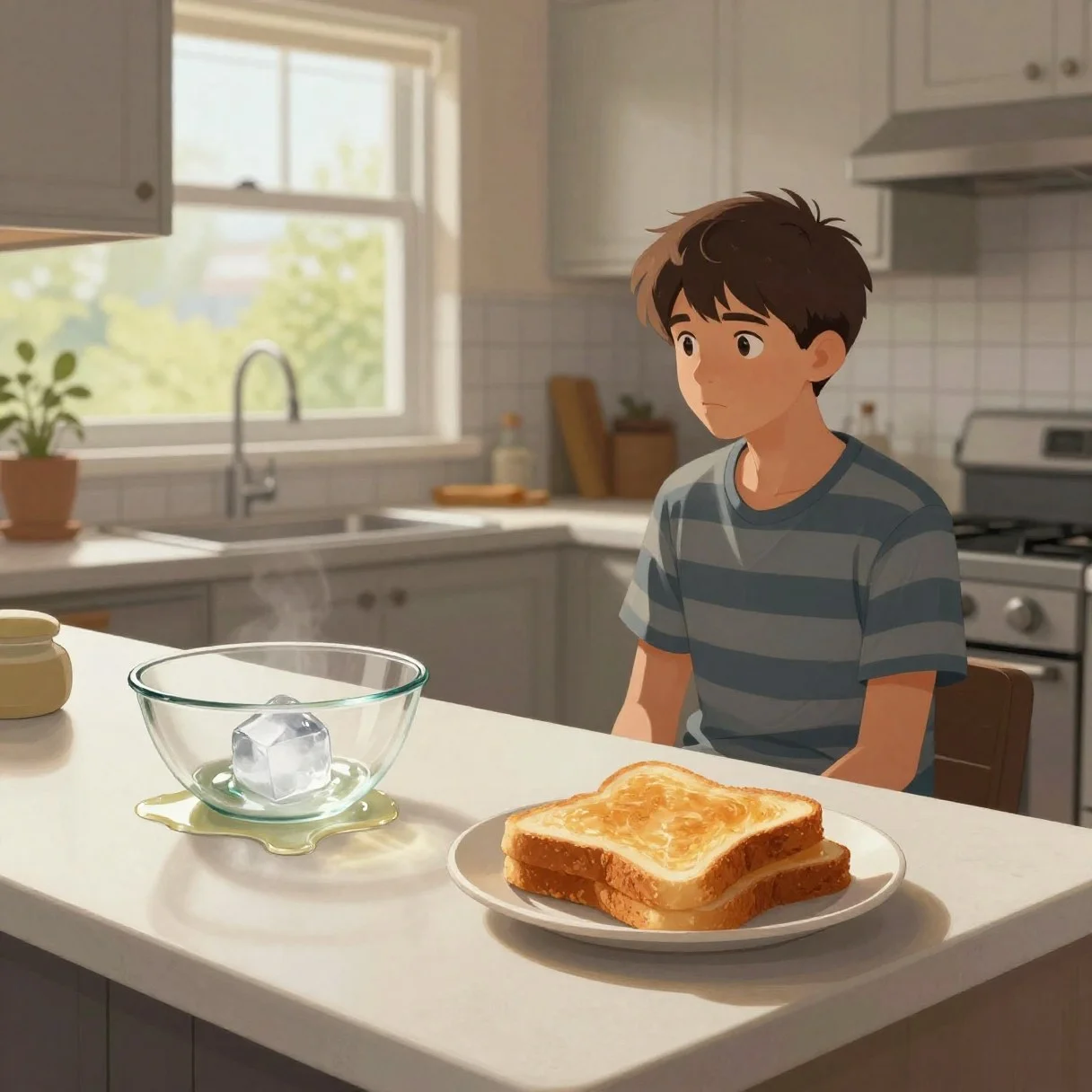
What your child will learn
Properties and changes
- Physical PropertiesIdentify physical properties such as density, melting point and solubility.
- Chemical PropertiesDescribe chemical properties such as flammability and reactivity.
- Physical Versus Chemical ChangeDistinguish physical changes from chemical changes.
- Signs of a ReactionUse changes in properties to tell whether a chemical reaction happened.
- Properties and Changes Review ReviewReview how property data show whether a chemical reaction has occurred.
Conservation of mass
- Reactants and ProductsIdentify the reactants and products in a chemical reaction.
- Atoms RearrangeExplain that atoms are rearranged, not created or destroyed, in reactions.
- Mass Is ConservedUse data to show total mass stays the same in a closed system.
- Balancing EquationsBalance simple chemical equations by counting atoms.
- Conservation of Mass Review ReviewReview how the conservation of atoms means mass is conserved in reactions.
Synthetic materials
- From Natural Resources to New MaterialsExplain how synthetic materials are made from natural resources.
- Plastics: Long Chains from Crude OilDescribe how plastics are made from petroleum and how they affect society.
- Medicines and Fabrics from the LabDescribe examples of synthetic medicines and fibers.
- Weighing the Impacts of Synthetic MaterialsEvaluate the benefits and costs of a synthetic material.
- Synthetic Materials Review ReviewReview how synthetic materials come from natural resources and affect society.
Energy in reactions
- Reactions that release heatExplain exothermic reactions that give off thermal energy.
- Reactions that absorb heatExplain endothermic reactions that take in thermal energy.
- Designing a hand warmerDefine criteria and constraints for a device that uses a reaction to release heat.
- Testing and improving the deviceUse test data to improve a design that absorbs or releases thermal energy.
- Energy in reactions review ReviewReview how reactions release or absorb energy and how engineers use them.
- Unit 2 test: Chemical ReactionsShow what you learned in the whole unit (Properties and changes, Conservation of mass, Synthetic materials, Energy in reactions) by answering mixed questions.
Try a question from this unit
From the lesson “Physical Properties”
A rock has a mass of 30 grams and a volume of 12 cubic centimeters. What is its density?
Show the answer
2.5 g/cm³. Density is mass divided by volume, so 30 divided by 12 gives 2.5 grams per cubic centimeter. The answer 0.4 divides volume by mass, which flips the idea upside down.
Hint kids see after a wrong try: “Density compares mass to volume. Decide which number goes on top of the division.”
Key words
- density
- solubility
- flammability
- reactivity
- physical change
- chemical change
- chemical reaction
- evidence
- reactant
- product
- rearrange
- conservation of mass
- closed system
- chemical equation
- coefficient
- synthetic
- natural resource
- plastic
- polymer
- synthetic fiber
- impact
- society
- exothermic
- endothermic
Try these lessons in Kids Shelf
Narrated lessons, pictures and quizzes for every grade from K to 8. Works offline.