Water, Weather and Climate
16 short narrated lessons in 3 chapters, each with pictures, a quiz with a hint and a second try, and an explanation for every answer.
Standards: MS-ESS2-4 MS-ESS2-5 MS-ESS2-6

What your child will learn
The water cycle
- Earth's Water SupplyDescribe where Earth's water is stored and how little of it is fresh.
- Evaporation and CondensationExplain how the Sun's energy drives evaporation and how cooling causes condensation.
- Precipitation and RunoffExplain how gravity brings water back down as precipitation and runoff.
- The Water Cycle Review ReviewReview how sunlight and gravity move water through the water cycle.
Air masses and weather
- The AtmosphereDescribe the layers of the atmosphere and the gases that make up air.
- Air Pressure and WindExplain how differences in air pressure cause wind.
- Air MassesDescribe how air masses get their temperature and humidity from where they form.
- Fronts and StormsExplain how fronts form where air masses meet and cause changes in weather.
- Air Masses and Weather Review ReviewReview how moving air masses and fronts cause changes in the weather.
Climate patterns
- Weather versus ClimateExplain the difference between daily weather and long-term climate.
- Uneven Heating of EarthExplain why the equator receives more solar energy than the poles.
- Global WindsDescribe how uneven heating and Earth's spin create global wind patterns.
- Ocean CurrentsExplain how ocean currents carry heat and affect the climate of nearby land.
- Mountains, Oceans and Local ClimateExplain how mountains and large bodies of water shape regional climates.
- Climate Patterns Review ReviewReview how sunlight, winds and ocean currents create climate patterns.
- Unit 5 Test: Water, Weather and ClimateShow what you learned in the whole unit (The water cycle, Air masses and weather, Climate patterns) by answering mixed questions.
Try a question from this unit
From the lesson “Earth's Water Supply”
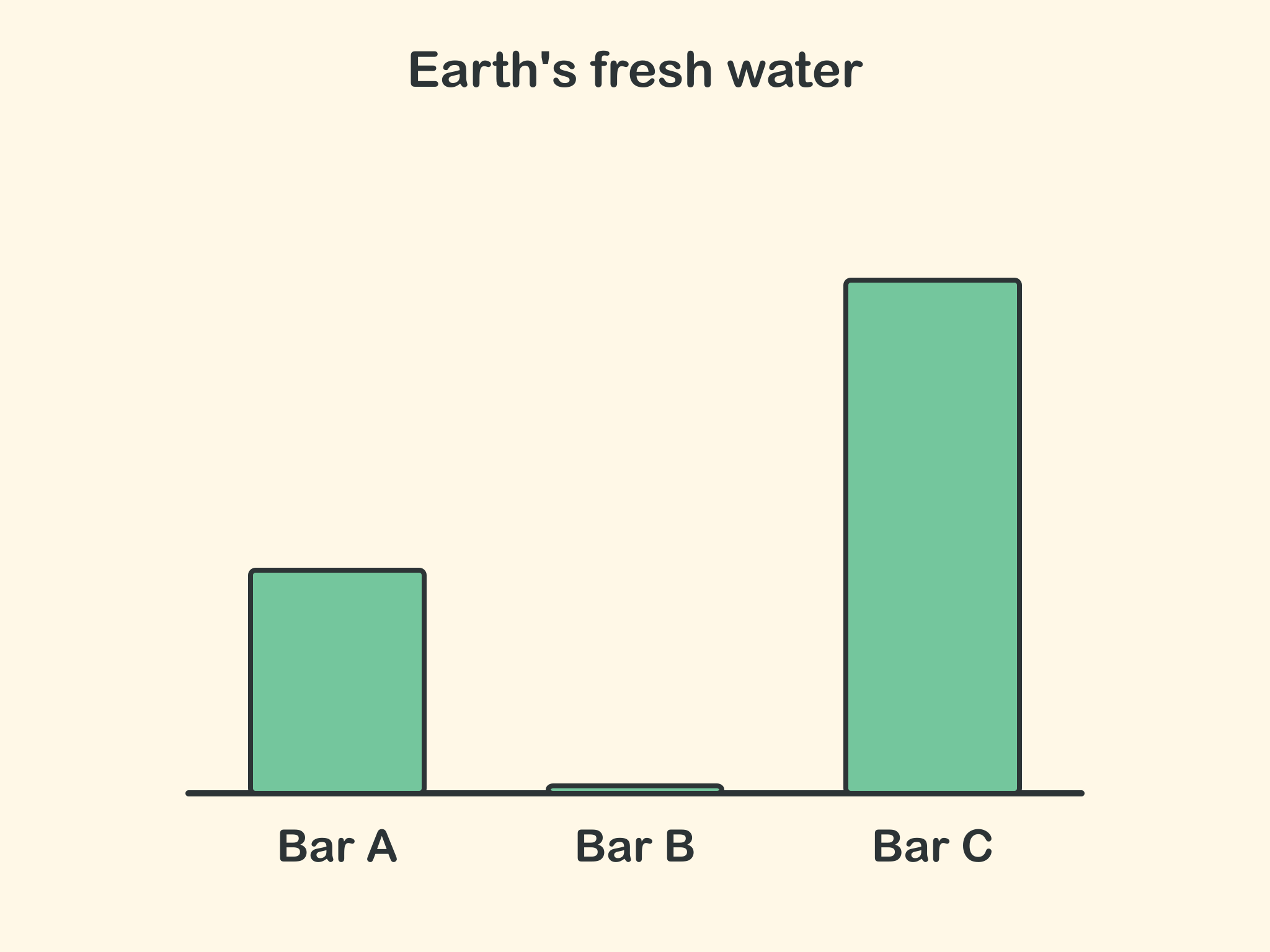
The bar graph shows how Earth's fresh water is shared among three reservoirs. Which bar stands for ice sheets and glaciers?
Show the answer
Bar C. Ice sheets and glaciers hold more than two-thirds of Earth's fresh water, so they match the tallest bar, Bar C. Ice is frozen fresh water, so it does count. Bar A is groundwater, and the tiny Bar B is lakes, rivers and air.
Hint kids see after a wrong try: “Think about which reservoir holds the largest share of Earth's fresh water.”
Key words
- fresh water
- reservoir
- evaporation
- condensation
- precipitation
- runoff
- atmosphere
- troposphere
- air pressure
- wind
- air mass
- humidity
- front
- cold front
- warm front
- climate
- weather
- latitude
- equator
- global winds
- Coriolis effect
- ocean current
- rain shadow
- regional climate
Try these lessons in Kids Shelf
Narrated lessons, pictures and quizzes for every grade from K to 8. Works offline.