People and the Planet
19 short narrated lessons in 4 chapters, each with pictures, a quiz with a hint and a second try, and an explanation for every answer.
Standards: MS-ESS3-3 MS-ESS3-4 MS-ESS3-5 MS-ETS1-1 MS-ETS1-2 MS-ETS1-3 MS-ETS1-4

What your child will learn
Human impact on Earth
- Land UseDescribe how farming, building and mining change the land.
- Water PollutionExplain how pollution enters water and how it can be reduced.
- Air QualityDescribe sources of air pollution and ways to reduce them.
- Protecting the EnvironmentDesign a way to monitor and reduce a human impact in your community.
- Human Impact on Earth: Review ReviewReview how people affect land, water and air and how impacts can be reduced.
Population and resources
- A Growing PopulationAnalyze data showing how the human population has grown over time.
- Using Resources per PersonExplain how the amount of resources each person uses affects Earth's systems.
- Reduce, Reuse, RecycleEvaluate how reducing, reusing and recycling lower the demand for resources.
- Population and Resources: Review ReviewReview how population growth and resource use affect Earth's systems.
Global temperatures
- The Greenhouse EffectExplain how gases in the atmosphere trap heat and keep Earth warm.
- Reading Temperature RecordsAnalyze data showing how Earth's average temperature has changed over the past century.
- Causes of the RiseExplain how burning fossil fuels adds carbon dioxide to the atmosphere.
- Effects and ResponsesDescribe effects of rising temperatures and ways people are responding.
- Global Temperatures Review ReviewReview the evidence for rising global temperatures and the factors behind it.
Design solutions for Earth
- The Engineering Design ProcessDescribe the steps engineers use to define, design, test and improve solutions.
- Testing and DataAnalyze test data to find the best parts of different designs.
- Improving a DesignUse test results to improve a design step by step.
- Design Solutions for Earth Review ReviewReview how engineers use criteria, testing and models to improve solutions.
- Unit 7 Test: People and the PlanetShow what you learned in the whole unit (Human impact on Earth, Population and resources, Global temperatures, Design solutions for Earth) by answering mixed questions.
Try a question from this unit
From the lesson “Land Use”
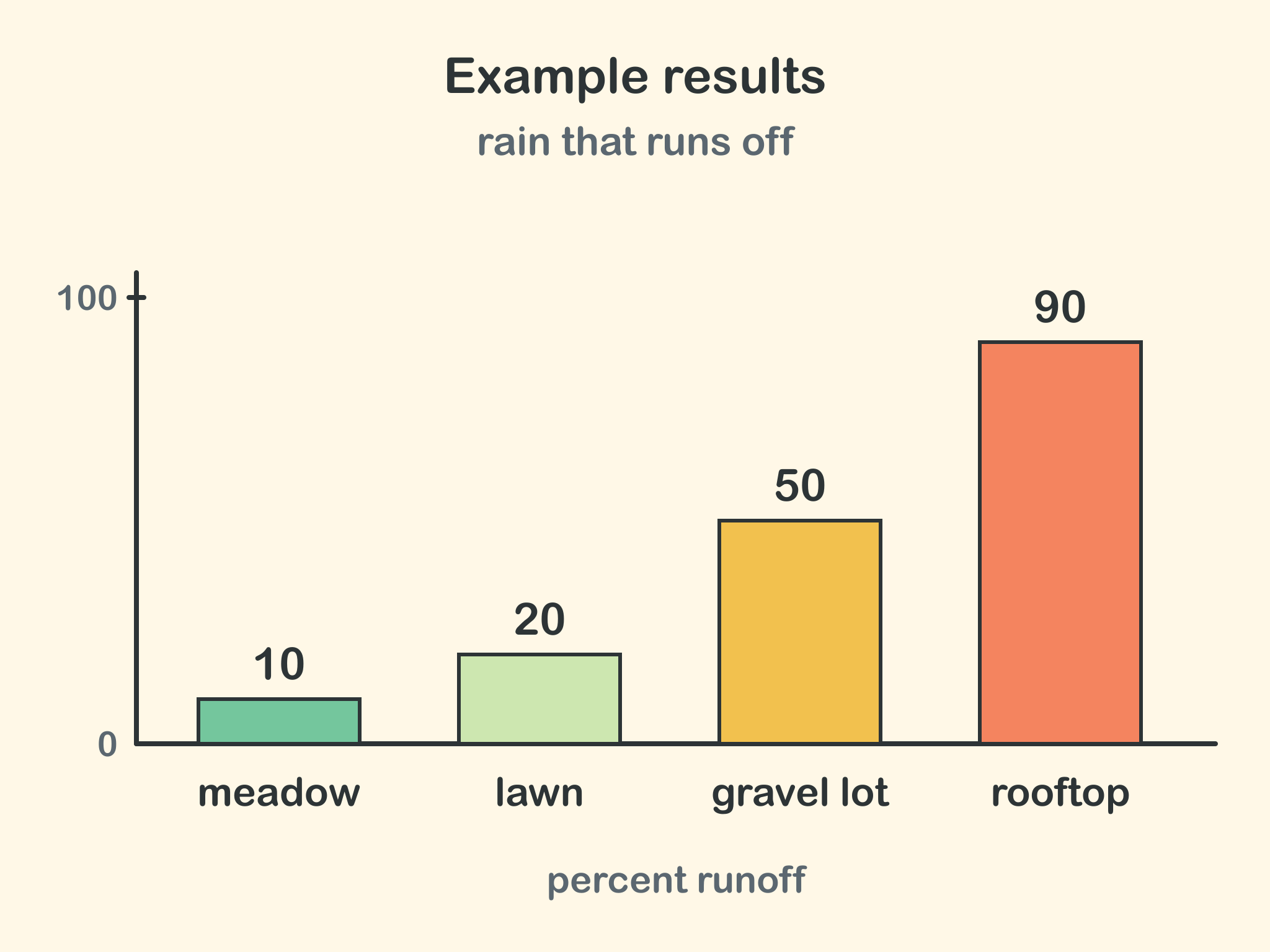
The chart shows example results for rain running off four surfaces. Which surface lets the most rain soak into the ground?
Show the answer
meadow. The meadow has the shortest bar, so the least rain runs off and the most soaks in. The rooftop has the tallest bar, but that means most of its rain runs off instead of soaking in.
Hint kids see after a wrong try: “The bars show water that runs off. Water that does not run off has somewhere else to go.”
Key words
- land use
- habitat
- pollution
- watershed
- air pollution
- emissions
- conservation
- monitor
- population
- growth
- consumption
- per capita
- recycle
- waste
- greenhouse effect
- greenhouse gas
- global temperature
- trend
- carbon dioxide
- fossil fuel
- sea level
- renewable energy
- engineering design process
- test
Try these lessons in Kids Shelf
Narrated lessons, pictures and quizzes for every grade from K to 8. Works offline.