Earth's Resources and Hazards
15 short narrated lessons in 3 chapters, each with pictures, a quiz with a hint and a second try, and an explanation for every answer.
Standards: MS-ESS3-1 MS-ESS3-2 MS-ETS1-1 MS-ETS1-2

What your child will learn
Natural resources
- Renewable and Nonrenewable ResourcesCompare renewable and nonrenewable resources with examples.
- Minerals and OresExplain how geologic processes concentrate minerals in certain places.
- Fossil FuelsDescribe how coal, oil and natural gas formed over millions of years.
- Natural Resources Review ReviewReview how Earth's processes cause resources to be unevenly spread and limited.
Natural hazards
- What Is a Natural Hazard?Describe natural hazards and how they can affect people.
- Tracking Earthquakes and VolcanoesExplain how scientists monitor data to spot warning signs of eruptions and earthquakes.
- Hurricanes, Tornadoes and FloodsDescribe how scientists track and forecast severe weather.
- Maps of RiskUse data maps to identify places that face a higher risk from a hazard.
- Natural Hazards Review ReviewReview how data helps scientists forecast natural hazards.
Engineering for safety
- Defining the ProblemDefine a hazard problem clearly, including criteria and constraints for a solution.
- Earthquake-Safe BuildingsDescribe design features that help buildings survive earthquakes.
- Protecting Against FloodsEvaluate solutions such as levees and wetlands for reducing flood damage.
- Comparing SolutionsUse a decision matrix to compare design solutions against criteria.
- Engineering for Safety Review ReviewReview how engineers design and compare solutions that reduce harm from hazards.
- Unit 6 Test: Earth's Resources and HazardsShow what you learned in the whole unit (Natural resources, Natural hazards, Engineering for safety) by answering mixed questions.
Try a question from this unit
From the lesson “Renewable and Nonrenewable Resources”
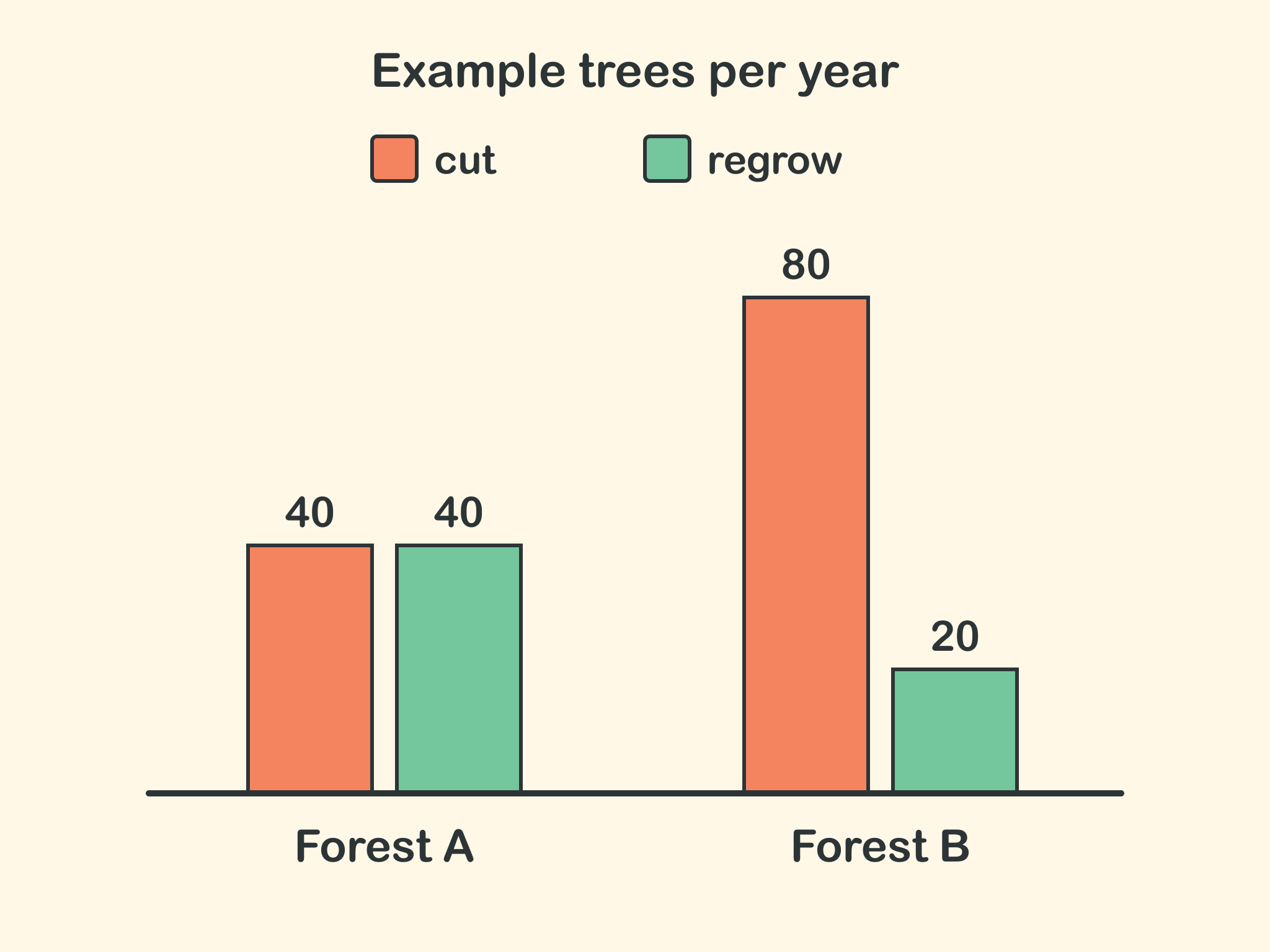
The chart shows example numbers for two imaginary forests. Which forest can keep supplying wood year after year?
Show the answer
Forest A, because as many trees regrow as are cut. In Forest A, as many trees regrow as are cut, so the forest can keep supplying wood. Forest B gives more wood now, but it loses trees every year and will shrink. Trees act as a renewable resource only when they are used no faster than they regrow.
Hint kids see after a wrong try: “For each forest, compare the height of the two bars.”
Key words
- renewable
- nonrenewable
- mineral
- ore
- fossil fuel
- natural hazard
- seismograph
- monitor
- hurricane
- tornado
- flood
- hazard map
- risk
- engineering problem
- criteria
- constraints
- design
- structure
- levee
- wetland
- decision matrix
- trade-off
Try these lessons in Kids Shelf
Narrated lessons, pictures and quizzes for every grade from K to 8. Works offline.